
The Fed Just Raised Rates. Here's Why It's Not as Bad for Homebuyers as It Sounds

The Fed Just Raised Rates. Here's Why It's Not as Bad for Homebuyers as It Sounds
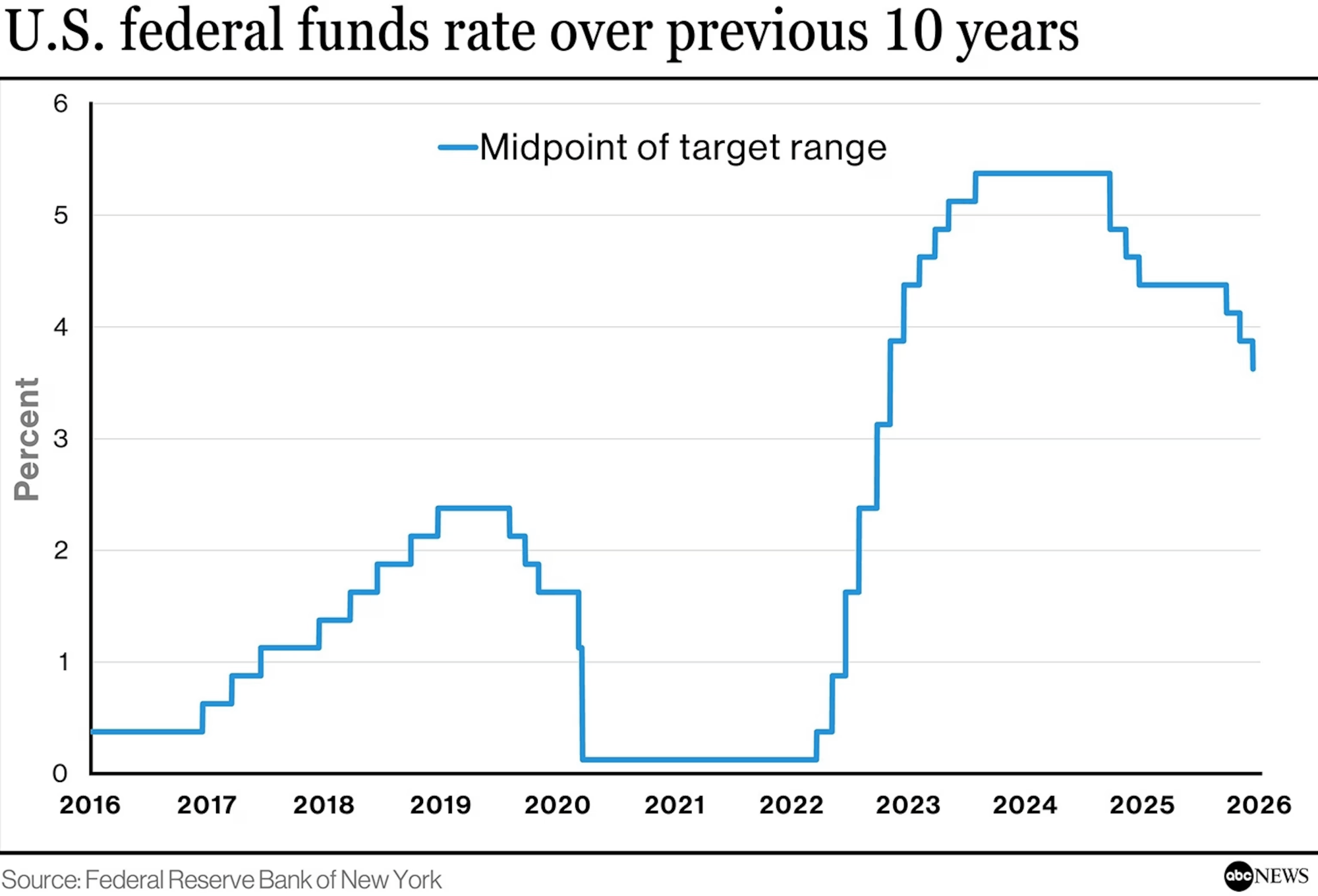
"Fed Raises Rates" is a headline that makes buyers nervous. If you've been saving, getting pre-approved, or browsing homes around DFW, your first thought was probably that it just got harder to buy.
Take a breath. A Fed rate increase is real news, but it's also one of the most misunderstood events in personal finance. The effect on your mortgage is usually smaller, slower, and less direct than the headline suggests. In some ways, today's move carries some quiet good news.
Here's what happened, what it really means for your mortgage, and how to make smart moves from here.
What the Fed Actually Did
On September 16, 2026, the Federal Reserve raised its benchmark federal funds rate by a quarter point, to a target range of 3.75% to 4.00%. It is the Fed's first increase since 2023. CBS News reported that the move came after a run of stubborn inflation readings. federalreserve
The Fed's own statement is worth reading, and not just for the inflation part. The committee said inflation is still elevated. It also described economic activity as expanding at a solid pace, job gains as keeping up with the workforce, and productivity growth as strong. Keep that in mind, because it matters below. federalreserve
Reason #1: The Fed Doesn't Set Your Mortgage Rate
This is the big one. The federal funds rate is what banks charge each other for overnight loans. Your 30-year fixed mortgage is a very different product: a loan you may hold for decades.
Because of that, fixed mortgage rates tend to track the 10-year Treasury yield and investor demand for mortgage-backed securities much more closely than the Fed's overnight rate. A quarter-point Fed hike does not mean mortgage rates automatically rise a quarter point. CBS's analysis makes the same point: borrowing costs don't move in lockstep with the Fed, and the longer-term bond market has more influence on where mortgage rates go. CBS News
Sometimes mortgage rates barely move after a Fed hike. Sometimes they even fall, if investors believe the Fed has inflation under control.
Reason #2: The Market Saw This Coming
Financial markets don't wait for the Fed to act. They price in what they expect.
This hike was not a surprise. Back in June, FOMC members' hawkish projections pushed bond markets to position for a hike later this year. By mid-July, markets were pricing in at least one Fed increase before the end of 2026. tradingeconomicstradingeconomics
That expectation has been building into lenders' pricing for months. Freddie Mac's weekly average rose from 6.49% in early July to 6.76% as of September 10. That gradual climb at least partly reflects the market getting ahead of today's decision. Much of the "damage" from this hike may already be baked into the rates lenders were quoting before the announcement. Freddie MacFreddie Mac
Reason #3: Fighting Inflation Is How Long-Term Rates Eventually Come Down
This one feels backwards, but it's key. The biggest long-term enemy of low mortgage rates isn't the Fed. It's inflation.
Investors who buy long-term bonds and mortgage-backed securities want returns that beat inflation. When inflation runs hot and they doubt the Fed will deal with it, they demand higher yields, and mortgage rates follow. When the Fed shows it's serious about bringing inflation back to its 2% target, investors can grow more comfortable accepting lower long-term yields.
That isn't guaranteed. If today's hike turns out to be the first of several, rates could stay elevated for a while. But if inflation cools and the Fed signals a pause, the path to lower mortgage rates gets clearer, not murkier. As CBS noted, the Fed's guidance and the coming inflation and jobs reports will likely matter more than this single quarter point.
Reason #4: The Fed Raises Rates When the Economy Is Holding Up
Central banks don't hike into a collapsing economy. They cut. The Fed raised rates while describing solid growth, steady job gains, and strong productivity.
For a homebuyer, that's meaningful. Job stability and income growth are what make a 30-year commitment feel safe. A strong labor market won't show up on your rate sheet, but it matters a lot more to your long-term finances than a quarter-point shift in an overnight bank rate.
Reason #5: Less Competition Can Mean More Negotiating Room
When headlines scare buyers to the sidelines, the buyers who stay in the market often gain leverage. That was already happening before today. In late August, Freddie Mac's chief economist noted that rising housing supply and slower price growth in many areas were giving buyers more options and moving the market toward balance. tradingeconomics
More options can mean more room to negotiate on:
- Price
- Repairs
- Seller concessions toward closing costs
- Rate buydowns, where the seller helps pay to lower your interest rate
How much leverage you have depends on the neighborhood, price point, and whether you're buying resale or new construction. DFW submarkets can behave very differently from one another.
Reason #6: Your Down Payment Savings May Earn a Little More
Yields on high-yield savings accounts, money market accounts, and CDs tend to follow the Fed's moves. If you're parking a down payment while you shop, a Fed hike can nudge that return up.
To be honest about the scale: an extra 0.25% on $30,000 in savings works out to roughly $75 more per year. That won't change your life, but your money is working a little harder while you look.
Reason #7: If You Already Have a Fixed-Rate Mortgage, Nothing Changes
If you bought or refinanced with a fixed-rate loan, today's hike doesn't touch your principal and interest payment. It stays exactly where it is.
What a Quarter Point Actually Means in Dollars
Let's put real numbers on it. Here's the monthly principal and interest on a $400,000 DFW home with 20% down, which is a $320,000 loan on a 30-year fixed.
| Scenario | Rate | Monthly P&I |
|---|---|---|
| Freddie Mac average, July 9, 2026 | 6.49% | $2,021 |
| Freddie Mac average, Sept. 10, 2026 | 6.76% | $2,078 |
| Hypothetical: full quarter point passed through | 7.01% | $2,131 |
Even in the worst-case scenario, where the entire Fed hike flows straight into mortgage rates (which isn't how it typically works), the difference is about $53 per month on this loan.
That's real money, and we don't dismiss it. But it's usually not the difference between buying and not buying. Property taxes, insurance, and HOA dues often move a DFW payment more than that. Property taxes in many DFW areas run around 2% of the home's value, which is about $667 a month on a $400,000 home.
These figures are for illustration only and are not a rate quote. Your rate depends on your credit, down payment, loan type, and market conditions on the day you lock.
Where the Hike Does Hurt
We'd rather give you the full picture than a sales pitch. Some borrowing costs do respond to the Fed right away:
- HELOCs and credit cards. These are typically tied to the prime rate, which banks usually set at 3 points above the top of the Fed's range. That puts prime around 7.00%. An extra 0.25% on a $50,000 HELOC balance adds roughly $10 a month.
- Adjustable-rate mortgages. Rates on ARMs can rise when they reach their adjustment period, since their indexes react to short-term rates.
- Auto loans and other variable-rate debt. These can also creep higher.
If you're planning to buy soon, paying down variable-rate balances does double duty. It saves you interest, and it can lower your debt-to-income ratio, which can help you qualify for better loan terms.
Smart Moves for DFW Buyers Right Now
Get fully pre-approved, not just pre-qualified. A full pre-approval tells you exactly what you can afford at today's rates. It also makes your offer stronger if you're negotiating concessions.
Talk about rate lock timing. If you're under contract or close to it, locking protects you if rates rise further. Ask your loan officer how long your lock lasts and whether a float-down option is available on your loan.
Put seller concessions to work. A seller credit can fund a permanent rate buydown or a temporary buydown that lowers your payment for the first year or two. Concession limits depend on loan type and down payment, so check your numbers before writing the offer.
Compare loan programs. Conventional, FHA, and VA loans are priced differently. The best fit for you may not be the one you assumed.
Watch the data, not the headlines. The next inflation and jobs reports will likely say more about where mortgage rates are headed than today's announcement.
Strengthen your file. Credit score, debt-to-income ratio, and down payment all affect your rate, no matter what the Fed does.
Frequently Asked Questions
Does a Fed rate hike raise mortgage rates?
Not directly or automatically. Fixed mortgage rates track long-term bond yields more closely than the federal funds rate. When a hike is widely expected, as this one was, much of its effect is often already priced in.
Should I wait to buy a home until rates drop?
Nobody can reliably time rates. Waiting also carries its own risks: home prices can rise, and competition typically returns when rates fall. It usually makes more sense to buy when the payment fits your budget and the home fits your life. Talk with a loan officer about your options.
Will mortgage rates go back down?
It depends largely on inflation. If inflation cools and the Fed signals it's done raising rates, long-term yields could ease, and mortgage rates could follow. If more hikes come, rates may stay elevated longer.
Does the Fed rate hike affect my existing mortgage?
Not if you have a fixed-rate loan; your principal and interest payment stays the same. If you have an ARM, your rate could change at its next scheduled adjustment.
Will my HELOC payment go up?
Most likely, yes. HELOCs are usually tied to the prime rate, which typically moves right along with the Fed.
The Bottom Line
Today's Fed hike is a headline worth understanding, but not one worth panicking over. The Fed doesn't set your mortgage rate, and the market expected this move. It came alongside a strong economy, and a Fed that gets inflation under control is ultimately what opens the door to lower long-term rates.
The buyers who do well in markets like this aren't the ones who perfectly time the Fed. They're the ones who know their numbers, negotiate from a position of strength, and have a lender who explains their options clearly.
If you want to see what today's news means for your payment, we're happy to run the numbers with you. There's no pressure and no obligation.
Recent Posts







President | Senior Loan Officer License ID: NMLS 621901
+1(972) 210-9264 | greg@clarityhomelending.com