
What Actually Happens Behind the Scenes When Your Mortgage Rate Changes?

What Actually Happens Behind the Scenes When Your Mortgage Rate Changes?

You get a rate quote at 10 a.m. You call back at 2 p.m. to lock, and the number is different. Nothing about your credit, income, or the house changed. So what happened?
Most people assume a mortgage rate is something a lender decides. In reality, your rate is the last stop on a journey that starts in the global bond market. It passes through Wall Street trading desks, gets repackaged and priced, lands on a spreadsheet called a rate sheet, and only then reaches you.
Very few lenders explain how that works. We think you should know, because once you understand the mechanics, rate quotes stop feeling random and you make better decisions.
Here's the full trip, stop by stop.
The Five-Stop Journey at a Glance
| Stop | Where it happens | What happens there |
|---|---|---|
| 1. Treasury market | Global bond market | Investors set the baseline cost of long-term money |
| 2. Mortgage-backed securities | Secondary mortgage market | Home loans are pooled, sold to investors, and priced over Treasuries |
| 3. Lender pricing | The lender's capital markets desk | The lender turns MBS prices into rates, after costs and risk |
| 4. The rate sheet | Your loan officer's screen | A grid of rates and prices, adjusted for your loan's details |
| 5. You | Your Loan Estimate and rate lock | A specific rate at a specific cost, protected once you lock |
Stop 1: The Treasury Market Sets the Baseline
The journey starts with U.S. Treasury securities, the bonds the federal government sells to fund itself. They're considered about as safe as investments get, so their yields act as the baseline cost of money across the economy.
For mortgages, the number to watch is the 10-year Treasury yield.
Why the 10-year and not the 30-year?
A 30-year mortgage rarely lasts 30 years. People sell, move, and refinance, so many loans are paid off well before the term ends. Investors price mortgages against a bond whose timeline more closely matches how long the money is actually out. The 10-year is the closest match.
Yields and prices move in opposite directions
This trips up a lot of people. When investors pile into bonds, bond prices rise and yields fall. When investors sell bonds, prices drop and yields climb. So "bonds had a good day" usually means rates improved.
What moves the 10-year
- Inflation data. Inflation erodes the value of future bond payments. Hotter inflation usually pushes yields up.
- Jobs and economic reports. A strong economy tends to lift yields, and signs of weakness tend to pull them down.
- Expectations about the Federal Reserve. The bond market reacts to what it thinks the Fed will do, often long before the Fed does it.
- Government borrowing and Treasury auctions. Heavy supply or weak investor demand can push yields higher.
- Global events. Uncertainty can send investors toward safe Treasuries, which pushes yields down.
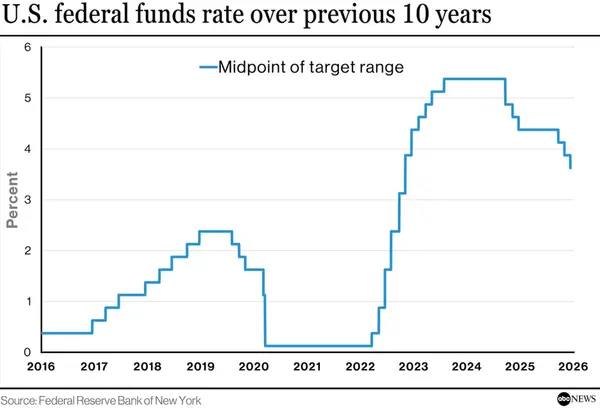
This is also why the Fed's rate decisions don't translate one-for-one into mortgage rates. The federal funds rate is an overnight rate between banks. Mortgages live much further out on the timeline. (Internal link: [The Fed Just Raised Rates. Here's Why It's Not as Bad for Homebuyers as It Sounds])
Stop 2: Your Loan Becomes a Mortgage-Backed Security
Here's the part most borrowers never hear about: most lenders don't keep your loan. They sell it into the secondary mortgage market, which frees up cash to lend to the next buyer.
How pooling works
- Conventional conforming loans are packaged by Fannie Mae and Freddie Mac into mortgage-backed securities (MBS).
- FHA, VA, and USDA loans are typically pooled into securities guaranteed by Ginnie Mae.
Investors such as pension funds, banks, insurance companies, and foreign buyers purchase these securities. In return, they receive a stream of the principal and interest that homeowners pay each month.
Why mortgage rates sit above Treasury yields
If MBS are backed by government-related guarantees, why don't mortgages carry Treasury-level rates? There are a few reasons.
Prepayment risk. This is the big one. A Treasury pays on a fixed schedule. A mortgage can be paid off at any time. When rates fall, homeowners refinance and investors get their money back just when reinvesting it pays less. When rates rise, nobody refinances, and investors are stuck holding lower-yielding loans longer. Investors demand extra yield for accepting that "heads you win, tails I lose" setup.
Guarantee fees. Fannie Mae, Freddie Mac, and Ginnie Mae charge for guaranteeing investors get paid even if a borrower defaults.
Servicing. Someone has to collect payments, manage escrow, and handle customer service. A slice of your interest rate pays for that.
Market conditions. When investors are nervous or demand for MBS is weak, they require more yield, and the gap widens.
That gap between the 10-year Treasury and the average 30-year mortgage rate is called the spread. Recently it has hovered around 2 percentage points. In late 2022 it went past 3 points, the widest since the mid-1980s.
That's why mortgage rates can rise even when Treasury yields are flat. It happens when the spread widens.
The market for loans that don't exist yet
Lenders don't wait until your loan closes to figure out what it's worth. MBS trade in a forward market called the TBA (to-be-announced) market. There, lenders can agree today to deliver loans with certain characteristics weeks or months from now. TBA prices change constantly throughout the trading day, and those prices are what lenders watch.
Stop 3: The Lender Converts MBS Prices Into Rates
Inside a mortgage company there's a team, often called the capital markets or secondary marketing desk. Its job is to translate live MBS prices into the rates and prices loan officers can offer.
What goes into the math
The lender starts with what investors will pay for a loan at a given rate. Then it accounts for:
- Guarantee fees owed to Fannie Mae, Freddie Mac, or Ginnie Mae
- Servicing value, since keeping or selling the right to service your loan has real market value
- Hedging costs to protect against rate movement
- Operating costs for staff, technology, compliance, and underwriting
- Margin, which is the lender's profit
Why hedging matters to you
When you lock a rate, the lender promises you that rate for a set period, often 30 to 60 days. But the lender won't sell your loan until after it closes. If rates rise in the meantime, the loan becomes worth less to investors, and the lender absorbs the loss.
To manage that risk, lenders hedge their pipeline of locked loans, often with offsetting positions in the TBA market. Hedging isn't free. It's one reason longer rate locks cost more than shorter ones: the lender is carrying that risk for longer.
Why rates change during the day
Each morning, the lender publishes rate sheets based on where MBS are trading. If MBS prices move enough during the day, the desk issues a reprice: new rate sheets reflecting the new market. A reprice can go either direction. That's the answer to the opening question. Between 10 a.m. and 2 p.m., the bond market moved enough to change your price.
Stop 4: The Rate Sheet on Your Loan Officer's Screen
This is where the Wall Street journey becomes a number you can use. A rate sheet isn't a single rate. It's a grid of rates paired with prices.
Reading a rate sheet
Every rate comes with a cost or a credit:
- Par is the rate with no extra cost and no credit.
- Below par (discount points): you pay upfront to get a lower rate. One point equals 1% of the loan amount.
- Above par (lender credits): you accept a slightly higher rate, and the lender gives you a credit toward closing costs.
Here's a simplified example on a $320,000 loan. The figures are made up for illustration and are not a current quote.
| Rate | Price | What it means on a $320,000 loan |
|---|---|---|
| 6.250% | 1.250 points cost | You pay $4,000 |
| 6.500% | 0.500 points cost | You pay $1,600 |
| 6.625% | Par | No cost, no credit |
| 6.750% | 0.375 points credit | You receive $1,200 |
| 7.000% | 1.125 points credit | You receive $3,600 |
Every one of those options is "correct." The right choice depends on how long you plan to keep the loan, how much cash you have for closing, and whether a seller is contributing concessions.
Why your rate differs from the advertised rate
The base rate sheet assumes a specific loan profile. Then loan-level price adjustments (LLPAs) and other pricing adjustments get layered on based on risk factors, including:
- Credit score
- Loan-to-value ratio (how much you're putting down or how much equity you have)
- Occupancy (primary home, second home, or investment property)
- Property type (single-family, condo, or 2–4 unit)
- Loan purpose (purchase, rate-and-term refinance, or cash-out refinance)
- Loan amount and program
- Lock period
That's why two people who apply on the same day can receive different rates, and why an advertised rate may not match your quote. An ad usually assumes an ideal profile. Your quote reflects your actual file.
How loan officers are paid (and why it protects you)
Under federal Regulation Z, a loan officer's compensation cannot be based on the interest rate or other terms of your loan. A loan officer can't earn more by steering you into a higher rate. That rule exists to keep pricing about the market and your file, not a paycheck.
Stop 5: The Rate Reaches You
Your Loan Estimate
After you apply, the lender must give you a Loan Estimate within three business days. It shows your rate, points or credits, estimated closing costs, and APR. The top of page one also shows whether your rate is locked and, if so, until when.
Important: until you lock, the rate on your Loan Estimate can change. It's a snapshot of that moment's pricing.
Locking your rate
When you lock, your rate and price are protected against market movement for the lock period. If bonds sell off the next morning, your locked rate doesn't budge.
A lock doesn't protect against changes to your loan, though. If your loan amount changes, your appraisal changes your loan-to-value ratio, or your credit changes, your pricing can be revised.
Float or lock?
- Locking gives you certainty and budget protection.
- Floating leaves room to benefit if rates improve, and exposes you if they rise.
Some lenders offer a float-down option, which allows a one-time rate improvement after locking if the market moves in your favor. Terms vary, so ask whether one is available on your loan.
Putting It All Together: One Morning in the Rate Market
Here's how the whole chain can play out in a single morning. This is a hypothetical example.
- 8:30 a.m. ET: A monthly inflation report comes in hotter than expected.
- 8:31 a.m.: Bond traders sell Treasuries, and the 10-year yield jumps.
- 8:35 a.m.: MBS prices drop along with Treasuries.
- 11:00 a.m.: MBS prices have fallen enough to trigger a reprice. The lender's capital markets desk sends new rate sheets.
- 11:05 a.m.: A loan officer's screen now shows par at a higher rate, or the same rate at a higher cost.
- 2:00 p.m.: A borrower who didn't lock this morning sees a different quote. A borrower who locked yesterday isn't affected.
Nobody at the lender "decided" to raise rates. The market moved, and the price followed.
What This Means When You're Shopping for a Mortgage
Compare Loan Estimates from the same day. Rates move daily, so quotes from different days aren't a fair comparison.
Compare the same lock period. A 60-day lock will price differently than a 30-day lock.
Compare rate and points together. A lower rate with two points isn't cheaper than a slightly higher rate at par unless you'll keep the loan long enough to break even.
Watch the big economic release days. Inflation and jobs reports can move rates quickly. The monthly jobs report is usually released on the first Friday of the month at 8:30 a.m. Eastern.
Strengthen the factors you control. Credit score and loan-to-value thresholds affect your pricing directly. Sometimes a small change, such as paying down a card before your credit is pulled or adjusting your down payment, moves you into a better pricing tier.
Ask your loan officer to walk you through the rate sheet. A good one will show you your options across several rates and costs, not just hand you a single number.
Frequently Asked Questions
Who actually sets mortgage rates?
No single entity does. Mortgage rates come out of the bond market, mainly the prices investors pay for mortgage-backed securities, which move with Treasury yields. Lenders then adjust for costs, risk, and your loan's details.
Why did my rate quote change in the same day?
MBS prices move during the trading day. When they move enough, lenders reprice their rate sheets, sometimes more than once a day. Until you lock, your quote reflects current market pricing.
Does the Federal Reserve control mortgage rates?
Indirectly at most. The Fed sets a short-term overnight rate. Mortgage rates track long-term bond yields, which respond to inflation, economic data, and expectations about future Fed policy.
Why is my rate higher than the rate I saw advertised?
Advertised rates typically assume an ideal profile, such as a high credit score, a large down payment, and a primary residence, and sometimes include points. Your rate reflects pricing adjustments for your credit score, loan-to-value ratio, property type, occupancy, loan purpose, and lock period.
What are discount points?
Discount points are an upfront fee paid to lower your interest rate. One point equals 1% of the loan amount. Whether points make sense depends on how long you plan to keep the loan.
Does locking my rate guarantee it won't change?
A lock protects your rate from market movement for the lock period. Your pricing can still change if your loan amount, credit, appraised value, or other loan details change.
The Bottom Line
Your mortgage rate isn't pulled out of thin air, and it isn't set by one person at one company. It starts with global investors deciding what long-term money is worth. It moves through the mortgage-backed securities market and a lender's capital markets desk, and it arrives on a rate sheet shaped by your specific loan.
Understanding that chain gives you an advantage. You'll know why quotes change, how to compare offers fairly, and when locking makes sense.
If you'd like to see your own options laid out across different rates and costs, the team at Clarity Home Lending is happy to walk through it with you.
Recent Posts








President | Senior Loan Officer License ID: NMLS 621901
+1(972) 210-9264 | greg@clarityhomelending.com